Cricket vs Baseball
Cricket vs Baseball: The Key Differences for American Fans

Cricket and baseball may seem like distant cousins at first glance, but you'll soon learn there are important differences in each sport. Ultimately, cricket is built around bowlers, overs, and wickets, rather than pitchers, three outs, and base-running.
The basic setup
Cricket and baseball differ in two key ways: how the ball is delivered, and the layout of the field.
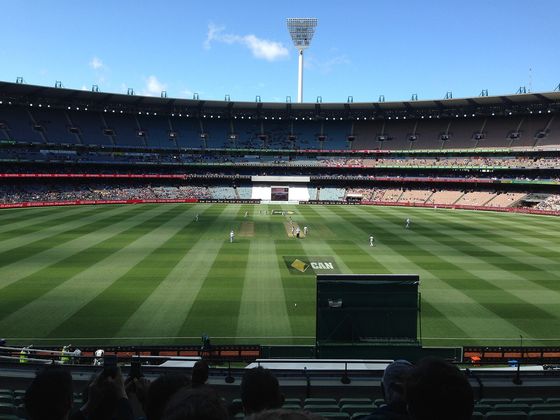
Where baseball uses a pitcher's mound, a plate, and foul lines, cricket is laid out with two wickets 22 yards apart, each with a set of three stumps at both ends of the pitch. The bating team's goal is to score runs by knocking the ball from the bowler's delivery with a bat. A cricket match goes through overs, each counting as six "legal" deliveries from a bowler's end - this structure is a vital difference from baseball's per-at-bat approach.
An over can be a maiden, where no runs are scored off the bat. Likewise, when a batsman is out, an umpire signals that out with an index finger raised, showing the batsman is eliminated via dismissal. Cricket's batting and bowling rules may feel strange to a baseball fan, but comparing the bowl-to-wickets-delivery contrast helps explain why both sports look similar but play very differently.
How outs and scoring work
A baseball fan needs to understand cricket's dismissal rules and scoring structure. The basic rules are: a batsman is out if the bowler hits the stumps and dislodges the bails. However, a batter is not out if the delivery from the bowler is deemed a "no ball" - and no ball counts as runs toward the batting team's score.
In cricket, dismissal signals an out: the finger raises to signal a wicket rather than automatic baserunning. However, the cricket scoring structure allows a batsman to score runs on a hit without forcing a mandatory run. Runs and wickets are scored across every format of cricket; in a One Day International (ODI) or Twenty20 International (T20I), a batsman can hit the ball to the boundary or the "six" to score the most.
Those scoring zones are fundamental. In baseball, each at-bat forces the batter to run after every hit and the team to experience a three-out cycle. In cricket, the batsman stands at their crease and scores from the bowling to the boundary. That hit-to-score without automatically running is one of the most baffling rules to a baseball fan - and it's a big part of why cricket may seem to go through stretches of little action.
Match lengths and formats
Cricket is inherently long, but the match lengths vary by format. Cricket's formats include Test cricket (two innings), ODI (50 overs per side), and T20I (20 overs per side).
Test cricket is the granddaddy of cricket, with two innings in each match spread out over five days. Each side takes turns playing out their full-set innings. It's the cricket equivalent of a marathon.
ODIs are tighter, with 50 overs per side. But they can also be quite lengthy, with matches stretching from four to eight hours.
T20Is are the modern, spry cousin, with 20 overs per side and matches running roughly 3.5 hours. This format has gained popularity due to its shorter round of scoring, similar to how MLB's shorter innings keep fans engaged.
Each baseball-to-cricket transition comes down to rules: knowing how wicket dismissal and the over rules work is crucial.
What to remember when watching
When a baseball fan sees a cricket match, they should remember three rules to make sense of the flow: the cricket ball is delivered by the bowler and no over looks the same, the wicket dismissal brings an out, and the match length varies by format.
Understand how different cricket formats can shape a match, especially when players bat through 50 or 20 overs. A Test match can involve many overs. Conversely, shorter matches like ODIs are 50/50 and T20s are 20/20, condensed into quick, inconsistent matches with few half-innings.
When watching a cricket match, remember to focus on the over and dismissal signals, as these tell a lot about the pace and scoring of the game. Spread out your attention across the wickets and see the scoring zones, so you don't miss a key moment in the way baseball focuses on the pitcher or home run zones.
Test, ODI, or T20 cricket changes the game's speed and scoring opportunities, so make sure to keep up on the format and follow along with the wickets and overs. They're key to following the match and understanding cricket's flow.
Sources consulted. ICC · Britannica · ICC ODI Playing Conditions PDF · ICC WTC Playing Conditions PDF · MLB Official Baseball Rules PDF · MLB Official Baseball Rules PDF